

A Complete 2026 Guide for Online Store Owners and Growing Businesses in India | Logotak.in
In traditional content strategies, the homepage and specific service pages carry the most ranking weight. However, within digital retail, your listing collections are your highest-value real estate. Despite this immense value, many online store owners completely neglect these pages, leaving them as simple grids with zero context or strategic optimisation. To capture high-intent traffic, you must transform these assets into high-converting landing hubs using a dedicated E-commerce Category Page SEO framework.
A well-optimised collection page has the unique ability to rank for dozens of related transactional keywords simultaneously. Instead of relying on a blank grid of products, a successful E-commerce Category Page SEO approach requires integrating 150 to 300 words of keyword-rich, unique descriptive copy. This descriptive text provides search crawlers with the structural context they need to understand what you sell, making it significantly easier to position your collections above competitors who feature no text at all.
Maximising the impact of your collection pages involves a few critical, practical steps. You must implement clear breadcrumb navigation and craft highly targeted H1 tags, title tags, and meta descriptions. Additionally, weaving user-generated reviews and structured internal links directly into the page layout signals deep topical authority. Because modern AI engines frequently scrape index collections to satisfy broad shopping recommendations, refining your E-commerce Category Page SEO ensures your online shop remains the definitive, recommended source for buyers throughout their purchasing journey.
FAQs :
- Why are category pages so important for online stores? – Category pages serve as primary entry points for broad, high-value commercial searches. Optimising them captures users who are comparing options within a product family rather than a single item.
- How much content should I add to an e-commerce category page? – You should aim for a minimum of 150 to 300 words of unique, keyword-rich copy. This text should describe the collection and naturally incorporate transactional search terms.
- What is internal linking, and how does it help collections? – Internal linking connects relevant blog posts or supporting guides back to your main category pages. This passes authority to your product grids, signalling to search engines that they are high-priority pages.
- Does including customer reviews on collection pages help rankings? – Yes. Integrating aggregate user ratings and star reviews directly onto the category page layout adds fresh, keyword-rich content and builds user trust.
- How do AI search engines treat e-commerce category pages? – AI search models look for structured category content to summarise broad recommendations. Adding descriptive text and FAQ sections makes your collections easily citeable for AI tools.
About the Author: Soubhagya Mukhopadhyay
Soubhagya Mukhopadhyay is a Senior Brand Strategist and the creative visionary at Logotak.in. His career spans over two decades of identifying the “soul” of a brand and projecting it through visual storytelling.
Beginning his journey in the fast-paced world of outdoor advertising with Selvel Vantage, Soubhagya quickly rose to lead business operations in India’s most competitive markets, including Mumbai, Bangalore, and Kolkata. This cross-regional expertise gives him a unique “pan-India” perspective on consumer psychology and design trends.
As a multidisciplinary creator—encompassing fashion photography, communication design, and filmmaking—Soubhagya bridges the gap between traditional advertising and the digital landscape of 2026. He is a firm believer that Generative Engine Optimisation (GEO) begins with an authentic human story.
Known for his infectious energy and a “team-first” philosophy, Soubhagya views every project as a collaborative masterpiece. To him, the only thing better than a breakthrough brand idea is sharing it over a great meal.
-
Expertise: Brand Narrative, Visual Communication, Fashion Photography, Filmmaking, and Multi-market Advertising Strategy.
-
Years of Experience: 22+


Sound-Off Video Strategy: Capturing Conversions Without Audio
A Complete 2026 Guide for Business Owners and Marketing Managers | Logotak.in | Bangalore, IndiaA massive structural flaw in many video ad campaigns is the assumption that viewers will listen to the voiceover. On Facebook and Instagram, approximately 85 percent of...
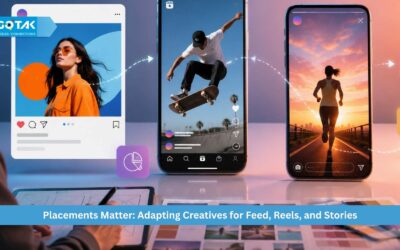
Placements Matter: Adapting Creatives for Feed, Reels, and Stories
A Complete 2026 Guide for Business Owners and Marketing Managers | Logotak.in | Bangalore, IndiaA common mistake marketing teams make is launching a single ad visual and broadcasting it identically across every available inventory placement. User behaviour on...

Defeating Ad Fatigue: The Science of Systematic Creative Testing
A Complete 2026 Guide for Business Owners and Marketing Managers | Logotak.in | Bangalore, IndiaEven the most profitable advertising campaigns have a natural shelf-life on social media platforms. As your target audience sees the exact same visual assets...

The First Line Rule: Writing Copy That Closes the Conversion Gap
A Complete 2026 Guide for Business Owners and Marketing Managers | Logotak.in | Bangalore, IndiaWhile a brilliant creative asset is responsible for stopping a user's initial scroll, it cannot do the selling alone. Your ad copy—the text block surrounding your image...

Static Image Layouts: Mastering the Rules of Thumb-Scroll Speed
A Complete 2026 Guide for Business Owners and Marketing Managers | Logotak.in | Bangalore, IndiaWhile short-form video dominates modern marketing discussions, static images remain one of the highest-performing assets for direct-response performance. They are...
The Power of Authenticity: Why Polished Ads Fail on Meta
A Complete 2026 Guide for Business Owners and Marketing Managers | Logotak.in | Bangalore, IndiaMany marketing managers believe that scaling a paid campaign requires booking expensive studios, professional actors, and high-end production crews. However, the data...

The 3-Second Rule: Hooking Viewers Before They Scroll
A Complete 2026 Guide for Business Owners and Marketing Managers | Logotak.in | Bangalore, IndiaMeta's internal data reveals a brutal truth for digital marketers: users decide whether to keep moving or pause on a post within just 1.7 seconds. When running video...