
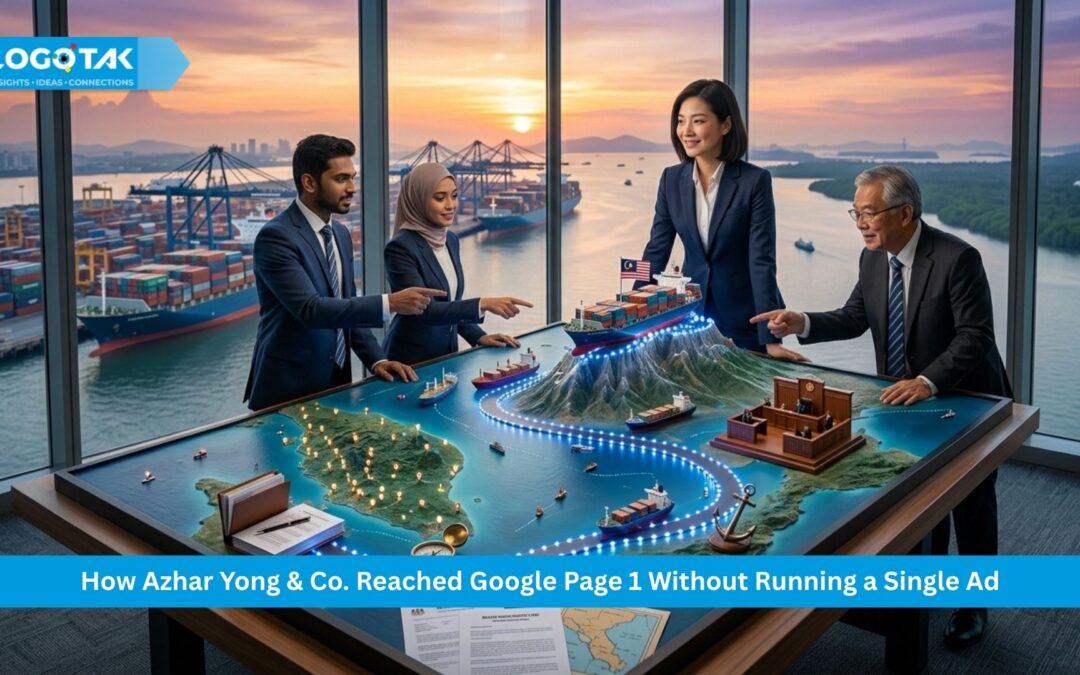
A 12-Month Organic SEO Journey for a Maritime Law Firm in Malaysia | By Logotak
Introduction: If You Cannot Run Ads, SEO Is Your Only Stronger Weapon
In most industries, businesses have the luxury of choice — they can run Google Ads, Facebook campaigns, sponsored posts, or influencer collaborations to drive leads. But what happens when the law itself takes that option away from you?
In Malaysia, the legal profession operates under strict advertising restrictions set by the Malaysian Bar Council. Law firms are prohibited from running paid advertisements to solicit clients. No Google Ads. No Facebook Ads. No sponsored content. For a legal practice, this means one thing — if you want clients to find you online, organic search engine optimisation (SEO) is not just a strategy. It is your only strategy.
This is the exact situation Azhar Yong & Co. faced when they approached Logotak — a Bangalore-based digital marketing agency — to build their digital presence from the ground up. What followed was a disciplined, data-driven, 12-month SEO campaign that took the firm from having no digital footprint to ranking on Google’s first page for highly competitive maritime law keywords — with some reaching the coveted #1 position.
This is the story of how we did it.
About the Client: Azhar Yong & Co.
Azhar Yong & Co. (azharyong.com) is a premier law firm based in Kuala Lumpur, Malaysia, specialising in admiralty and maritime law. The firm offers comprehensive legal services across Southeast Asia, covering areas including:
- Shipping and admiralty disputes
- Cargo claims and marine insurance matters
- Corporate and company law
- Cross-border international maritime cases
The firm’s team includes a Master Mariner with over 32 years of global shipping experience — a rare combination of legal and maritime expertise that makes Azhar Yong & Co. uniquely positioned in a niche but highly lucrative legal market.
Despite their exceptional credentials, the firm had virtually no online visibility when they came to Logotak. They had no established website, no content strategy, and no SEO presence — in a market where their competitors were also largely absent from digital platforms.
The Challenge: Building Visibility in a Restricted, Niche Market
1. No Advertising Allowed
Malaysian Bar Council regulations strictly prohibit law firms from running paid advertisements. This eliminated the fastest route to visibility and forced us to rely entirely on organic search — a longer but far more sustainable path.
2. Zero Digital Foundation
Azhar Yong & Co. had no existing website when the project began. We needed to build everything from scratch — domain, website design, content architecture, and technical SEO infrastructure — before any ranking work could begin.
3. Highly Specialised Niche
Maritime law is an extremely niche area of practice. The audience — shipping companies, vessel owners, cargo operators, and marine insurers — is specific and geographically spread across Southeast Asia. Keyword volumes were lower than general legal terms, but the intent behind every search was incredibly high. A single well-ranked keyword could mean a major client and significant legal fees.
4. Competitive Regional Landscape
While digital marketing in Malaysian law was relatively underdeveloped, the firm needed to stand out across Southeast Asia — including markets in Singapore, Indonesia, Thailand, and beyond — where maritime commerce is a major economic driver.
|
The Core Brief Build Azhar Yong & Co.’s entire digital presence from zero, achieve first-page Google rankings for maritime law keywords in Malaysia and Southeast Asia — with no paid advertising budget whatsoever. |
Logotak’s Strategy: The 4-Pillar SEO Framework
Our approach was built on four interconnected pillars, each reinforcing the other over a 12-month period. There were no shortcuts — only consistent, well-researched, quality-driven execution.
Pillar 1: Website Development with SEO Architecture Built In
Before we wrote a single blog post or built a single backlink, we built the website itself with SEO as the foundation — not an afterthought. This included:
- Clean URL structure aligned with target keyword categories
- Mobile-first responsive design (Google’s primary indexing criterion)
- Fast page load speeds and Core Web Vitals optimisation
- Schema markup for legal services, helping Google understand the content context
- XML sitemaps and robots.txt are properly configured
- SSL certification and technical security compliance
We also built the site in both English and Mandarin Chinese, recognising that a significant portion of Malaysia’s maritime business community is Chinese-speaking — an insight that gave us a competitive content advantage from day one.
Pillar 2: Monthly Keyword Research and Content Intelligence
Every month throughout the campaign, our team conducted fresh keyword research using a combination of tools including Google Ads Keyword Planner, Google Analytics 4 (GA4), and Google Trends — along with several AI-powered content intelligence tools to analyse search consumption patterns and keyword effectiveness.
This monthly cycle was critical. Maritime law search trends shift with global shipping events, seasonal trade volumes, and regulatory changes. By refreshing our keyword pool every month, we ensured that every piece of content we produced was aligned with what potential clients were actively searching for — not what was relevant six months ago.
Our keyword strategy focused on three tiers:
- Primary keywords: ‘maritime lawyer Malaysia’, ‘admiralty law firm Kuala Lumpur’, ‘shipping dispute lawyer Southeast Asia’
- Secondary keywords: ‘cargo claim lawyer Malaysia’, ‘marine insurance dispute’, ‘vessel arrest Malaysia’
- Long-tail keywords: ‘what to do if cargo is damaged during shipping Malaysia’, ‘how to file a shipping dispute claim in Malaysia’
Pillar 3: Consistent, High-Quality Content Publishing
Content was the engine of this entire campaign. We maintained an unwavering publishing schedule throughout all 12 months:
- 2 blog posts per week published on azharyong.com — every week, without exception
- 4 social media posts per week across LinkedIn, Facebook, and Instagram
- 2 long-form LinkedIn articles per week — establishing the firm’s partners as thought leaders in maritime law
Over 12 months, this amounted to approximately 104 blog posts, 208 social media posts, and 104 LinkedIn articles — a substantial content library that Google’s algorithm rewarded with growing authority and trust.
Each blog post was structured to satisfy both traditional SEO requirements and modern AEO (Answer Engine Optimisation) standards — meaning the content was written to be directly cited by AI tools like Google’s Search Generative Experience, ChatGPT, and Perplexity. This forward-thinking approach ensured the firm’s content was not only ranking on traditional search but also being surfaced in AI-generated answers.
Topics covered included:
- Detailed explanations of Malaysian maritime law procedures
- Case study articles on common shipping disputes and their resolutions
- Guides for shipping companies on legal rights during cargo damage or vessel detention
- Comparisons of maritime law frameworks across Southeast Asian jurisdictions
- Legal updates on international shipping regulations affecting Asian trade routes
Pillar 4: Strategic Backlink Building in Maritime Platforms
We built the firm’s domain authority through a carefully curated backlink strategy focused exclusively on relevant, high-authority platforms within the maritime and legal sectors. This included:
- Discussion forums and communities focused on maritime law in Asia
- Industry portals covering admiralty law, shipping, and marine insurance
- Legal directories and bar association listings
- Maritime trade publications and news platforms across Southeast Asia
Every backlink was earned through genuine value — detailed contributions to discussions, published articles, and expert commentary. We avoided low-quality link farms entirely, understanding that in a niche like maritime law, one high-authority backlink from a shipping industry portal is worth more than a hundred generic directory links.
The Results: 12 Months of Consistent Effort, Measurable Outcomes
|
Key Outcomes at a Glance First page Google rankings achieved | Multiple #1 keyword positions secured | Significant organic traffic growth recorded | Measurable increase in business enquiries and leads generated |
Google First Page Rankings
Within 12 months, Azhar Yong & Co. began appearing on Google’s first page for multiple targeted maritime law keywords across Malaysia and Southeast Asia. This was achieved with zero paid advertising — every ranking was earned purely through organic SEO.
Certain high-value keywords reached the #1 position on Google — a remarkable achievement in a specialised legal niche where trust and authority are paramount ranking factors.
Organic Traffic Growth
Month-on-month, the website recorded consistent and significant growth in organic visitors. The traffic was highly qualified — users searching for specific maritime legal services, not casual browsers. This meant the bounce rate remained low and the session quality was high, with visitors spending meaningful time reading the firm’s content and articles.
LinkedIn Authority Building
The consistent LinkedIn article publishing strategy transformed the firm’s partners into recognised thought leaders within the Southeast Asian maritime law community. Articles regularly generated engagement from shipping companies, port authorities, marine insurers, and international legal professionals — the firm’s precise target audience.
Business Leads and Enquiries
Most importantly, the SEO campaign translated into real business outcomes. Azhar Yong & Co. began receiving organic enquiries from clients across Malaysia and Southeast Asia, with cases including cargo disputes, vessel arrests, and marine insurance claims. For a firm that could not run a single advertisement, this represented a transformational change in their business development pipeline.
Key Takeaways: What Every Business Can Learn from This Campaign
1. Consistency Beats Shortcuts
There were no viral moments, no overnight wins. What drove results was showing up every single week — two blogs, four social posts, two LinkedIn articles — for 12 consecutive months. Algorithms reward consistency, and so do clients.
2. Niche SEO Is Powerful
Maritime law has a smaller search audience than general legal terms, but the intent is extraordinarily high. A shipping company searching for a ‘vessel arrest lawyer in Malaysia’ is not browsing casually. They have an immediate, high-value legal need. Niche SEO targets fewer people but converts far better.
3. Build for AI as Well as Google
We structured every blog post to answer specific questions clearly and directly — not just to rank on Google, but to be cited by AI-powered search tools. In 2025 and beyond, AEO (Answer Engine Optimisation) and GEO (Generative Engine Optimisation) are not optional additions to SEO strategy — they are core requirements.
4. Backlinks Must Be Relevant, Not Just Numerous
Our entire backlink strategy was focused on the maritime and legal sector. A single well-placed reference in an admiralty law forum did more for domain authority than dozens of generic links. Quality, relevance, and context are everything in modern link building.
5. When Paid Ads Are Not an Option, SEO Is the Business
Azhar Yong & Co.’s situation was unique — they had no choice but to succeed at SEO. But the lesson applies to any business: organic search is the most sustainable, most cost-effective, and most trustworthy form of digital marketing available. Paid ads stop the moment your budget runs out. SEO keeps working.
Is Your Business Ready for Results Like These?
Logotak is a Bangalore-based digital marketing agency specialising in SEO, content strategy, and organic growth for businesses across India and Southeast Asia. We work with mid-size companies and growing businesses who want sustainable, long-term results — not short-term traffic spikes.
Whether you are a law firm, a B2B company, an e-commerce brand, or a professional services firm, we bring the same disciplined, research-driven approach that took Azhar Yong & Co. from zero digital presence to Google Page 1 rankings.
|
Get a FREE SEO Audit We will analyse your website and show you exactly where your traffic growth opportunities are — no strings attached. Reach out to us at logotak.in or email hello@logotak.in to get started. |
Written by the Logotak SEO Team | logotak.in | Bangalore, India
About the Author: Soubhagya Mukhopadhyay
Soubhagya Mukhopadhyay is a Senior Brand Strategist and the creative visionary at Logotak.in. His career spans over two decades of identifying the “soul” of a brand and projecting it through visual storytelling.
Beginning his journey in the fast-paced world of outdoor advertising with Selvel Vantage, Soubhagya quickly rose to lead business operations in India’s most competitive markets, including Mumbai, Bangalore, and Kolkata. This cross-regional expertise gives him a unique “pan-India” perspective on consumer psychology and design trends.
As a multidisciplinary creator—encompassing fashion photography, communication design, and filmmaking—Soubhagya bridges the gap between traditional advertising and the digital landscape of 2026. He is a firm believer that Generative Engine Optimisation (GEO) begins with an authentic human story.
Known for his infectious energy and a “team-first” philosophy, Soubhagya views every project as a collaborative masterpiece. To him, the only thing better than a breakthrough brand idea is sharing it over a great meal.
-
Expertise: Brand Narrative, Visual Communication, Fashion Photography, Filmmaking, and Multi-market Advertising Strategy.
-
Years of Experience: 22+
How to Do Keyword Research for a Niche Business: A Step-by-Step Guide
A 12-Month Organic SEO Journey for a Maritime Law Firm in Malaysia | By LogotakThe secret to how to do keyword research for niche business growth lies in "Content Intelligence." Instead of looking for the most searched words, look for the most profitable ones. Start...
What are AEO and GEO? The New SEO Rules for 2026
A 12-Month Organic SEO Journey for a Maritime Law Firm in Malaysia | By LogotakThe digital landscape has shifted from "Search" to "Answer." While traditional SEO focused on driving traffic to a website, What is Answer Engine Optimisation (AEO) focuses on providing the...
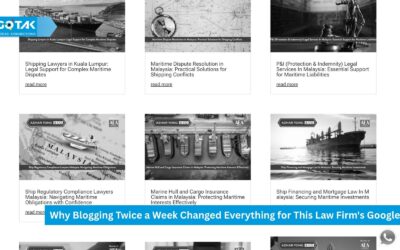
Why Blogging Twice a Week Changed Everything for This Law Firm’s Google Rankings
A 12-Month Organic SEO Journey for a Maritime Law Firm in Malaysia | By LogotakWhen clients ask, "Does blogging help SEO?", they are often looking for a shortcut. However, our 12-month campaign for Azhar Yong & Co. proved that the real power lies in consistency....
What is a Backlink and Why Does Your Business Website Need Them?
A 12-Month Organic SEO Journey for a Maritime Law Firm in Malaysia | By LogotakIn simple terms, a backlink is created when one website links to another. If a reputable industry portal or a legal directory links to your firm’s homepage, search engines view this as a...

How Long Does SEO Take to Work? Real Timeline from a Malaysian Law Firm
A 12-Month Organic SEO Journey for a Maritime Law Firm in Malaysia | By LogotakOne of the most frequent questions we encounter is: "How long does SEO take to show results?" For many business owners, the wait can feel indefinite. However, our recent 12-month journey...
Blog Post: Why Law Firms in Malaysia Cannot Run Google Ads?
A 12-Month Organic SEO Journey for a Maritime Law Firm in Malaysia | By LogotakUnder the strict Legal Publicity Rules 2001, and the recently updated 2026 Bar Council guidelines, advocates and solicitors are prohibited from "touting" or using sensationalist advertising...

Measuring AI Visibility: New Metrics Beyond “Click-Through Rate”
For decades, the success of a digital strategy was measured by the click. We tracked impressions, monitored click-through rates (CTR), and calculated conversions from organic traffic. However, in 2026, as search engines become answer engines, the "click" is no longer...