
A Complete 2026 Guide for Business Owners and Marketing Managers | Logotak.in | Bangalore, India
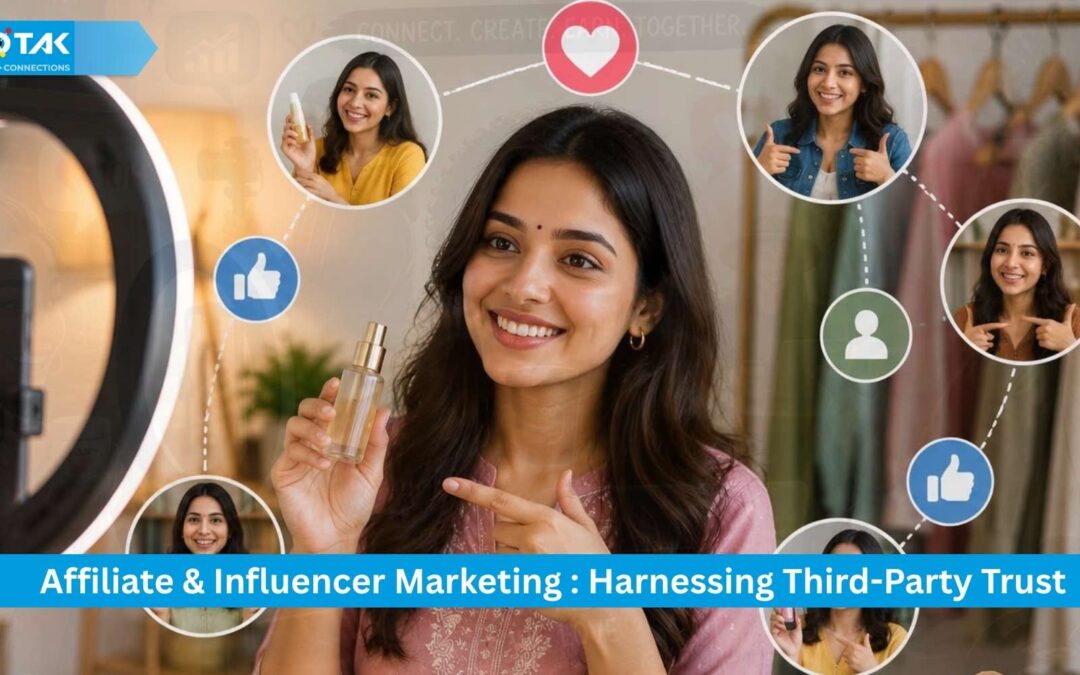
In a digital marketplace where buyers are increasingly skeptical of corporate advertisements, peer-to-peer recommendations carry immense weight. Consumers no longer rely solely on brand messaging; they trust creators, reviewers, and niche communities who test and validate products in real time. Integrating an Affiliate and Influencer Marketing Strategy leverages established third-party credibility to scale business reach.
While often managed separately, affiliate marketing and influencer partnerships have merged into a unified performance channel. This modern model balances brand awareness with direct sales accountability:
- Nano & Micro-Influencer Partnerships: Partnering with creators who have 1,000 to 100,000 followers. These accounts yield higher engagement rates and deeper audience trust than celebrity endorsements.
- Performance-Based Affiliate Commissions: Compensating creators, publishers, and review sites with recurring or sales-tiered commissions on every verified referral.
- Social Commerce Integration: Deploying native affiliate tools across platforms like TikTok Shop, Instagram Reels, and YouTube Shopping to reduce purchase friction.
Developing a scalable Affiliate and Influencer Marketing Strategy requires transitioning from transactional, one-off post deals to sustained, long-term creator relationships. By combining multi-touch attribution tracking with creator licensing rights, brands transform word-of-mouth recommendations into a predictable customer acquisition channel.
FAQs
What is the difference between affiliate marketing and influencer marketing?
Influencer marketing traditionally focuses on upfront brand awareness campaigns with creators, whereas affiliate marketing pays performance-based commissions directly on tracked sales.
Why are micro-influencers often preferred over macro or celebrity influencers?
Micro-influencers maintain higher audience trust and engagement rates in specific niches at a significantly lower cost-per-acquisition.
How do brands track sales from influencer and affiliate partners?
Sales are tracked using custom UTM links, personalized discount codes, platform-native affiliate tags, and first-party pixel data.
What is social commerce in influencer marketing?
Social commerce allows users to discover, evaluate, and purchase products directly inside social apps (such as TikTok Shop or Instagram) through creator posts.
How do brands handle compliance in affiliate and influencer content?
Partners must clearly disclose paid sponsorships and affiliate relationships using explicit tags (e.g., #Ad or #PaidPartnership) to comply with consumer protection regulations.
About the Author: Soubhagya Mukhopadhyay
Soubhagya Mukhopadhyay is a Senior Brand Strategist and the creative visionary at Logotak.in. His career spans over two decades of identifying the “soul” of a brand and projecting it through visual storytelling.
Beginning his journey in the fast-paced world of outdoor advertising with Selvel Vantage, Soubhagya quickly rose to lead business operations in India’s most competitive markets, including Mumbai, Bangalore, and Kolkata. This cross-regional expertise gives him a unique “pan-India” perspective on consumer psychology and design trends.
As a multidisciplinary creator—encompassing fashion photography, communication design, and filmmaking—Soubhagya bridges the gap between traditional advertising and the digital landscape of 2026. He is a firm believer that Generative Engine Optimisation (GEO) begins with an authentic human story.
Known for his infectious energy and a “team-first” philosophy, Soubhagya views every project as a collaborative masterpiece. To him, the only thing better than a breakthrough brand idea is sharing it over a great meal.
-
Expertise: Brand Narrative, Visual Communication, Fashion Photography, Filmmaking, and Multi-market Advertising Strategy.
-
Years of Experience: 22+


Keyword Intent in E-Commerce: Targeting Buyers, Not Browsers
A Complete 2026 Guide for Online Store Owners and Growing Businesses in India | Logotak.inIf you run an online store and follow generic SEO advice, you are likely focusing on keywords meant for informational websites. Standard marketing content targets top-of-funnel...
What is E-Commerce SEO and Why Is It Different from Regular SEO?
A Complete 2026 Guide for Online Store Owners and Growing Businesses in India | Logotak.inIntroduction: Not All SEO Is Created Equal If you run an online store and have ever Googled 'how to improve my website's SEO,' you have almost certainly landed on advice meant...
How to Do Keyword Research for a Niche Business: A Step-by-Step Guide
A 12-Month Organic SEO Journey for a Maritime Law Firm in Malaysia | By LogotakThe secret to how to do keyword research for niche business growth lies in "Content Intelligence." Instead of looking for the most searched words, look for the most profitable ones. Start...
What are AEO and GEO? The New SEO Rules for 2026
A 12-Month Organic SEO Journey for a Maritime Law Firm in Malaysia | By LogotakThe digital landscape has shifted from "Search" to "Answer." While traditional SEO focused on driving traffic to a website, What is Answer Engine Optimisation (AEO) focuses on providing the...

Why Blogging Twice a Week Changed Everything for This Law Firm’s Google Rankings
A 12-Month Organic SEO Journey for a Maritime Law Firm in Malaysia | By LogotakWhen clients ask, "Does blogging help SEO?", they are often looking for a shortcut. However, our 12-month campaign for Azhar Yong & Co. proved that the real power lies in consistency....
What is a Backlink and Why Does Your Business Website Need Them?
A 12-Month Organic SEO Journey for a Maritime Law Firm in Malaysia | By LogotakIn simple terms, a backlink is created when one website links to another. If a reputable industry portal or a legal directory links to your firm’s homepage, search engines view this as a...
How Long Does SEO Take to Work? Real Timeline from a Malaysian Law Firm
A 12-Month Organic SEO Journey for a Maritime Law Firm in Malaysia | By LogotakOne of the most frequent questions we encounter is: "How long does SEO take to show results?" For many business owners, the wait can feel indefinite. However, our recent 12-month journey...