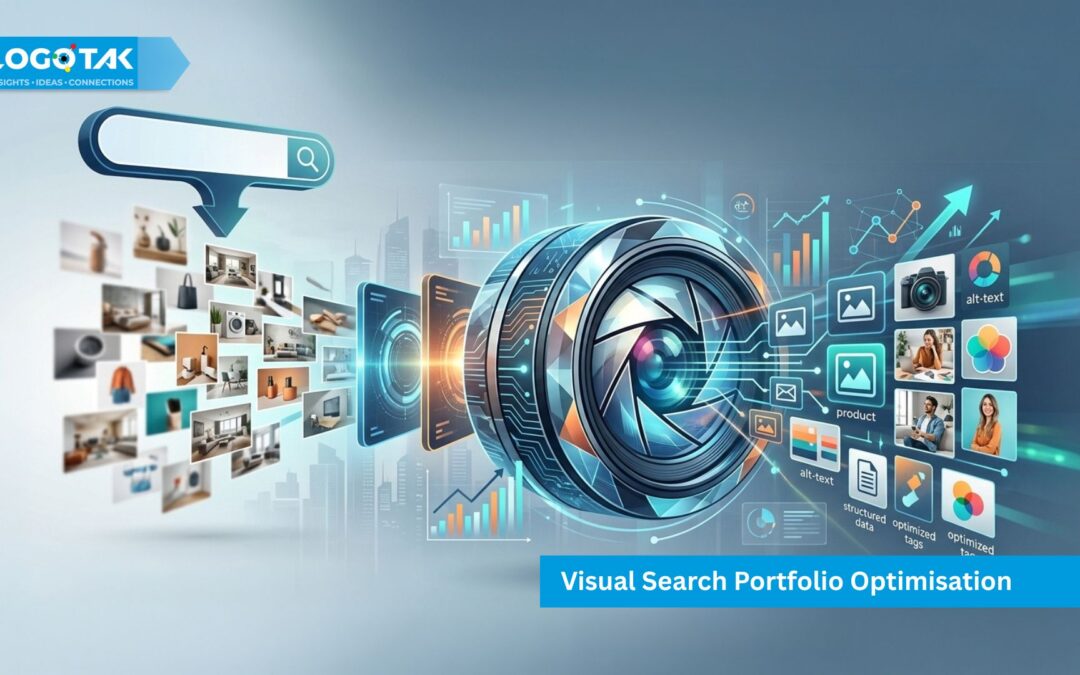
In 2026, the camera has become a primary search interface. For creative agencies, this means your portfolio is no longer just a display of aesthetic talent; it is a library of searchable visual data. When a potential client uses Google Lens to identify a striking brand identity or a unique piece of packaging, your work should be the definitive result that appears.
The Shift from Pixels to Identifiable Entities
AI search engines like Google Lens use computer vision to deconstruct images into shapes, colours, and textures. To ensure your portfolio is “readable”, you must move beyond generic file handling. High-resolution, original photography is essential, as AI models can now distinguish between authentic project shots and overused stock imagery. By providing clear, well-lit visuals from multiple perspectives, you help the AI build a high-confidence “visual fingerprint” of your work.
Connecting Sight to Site
Technical metadata serves as the bridge between an image and its creator. To master Visual Search Portfolio Optimisation, every project image must be supported by descriptive, context-rich alt text and structured data. This doesn’t just describe what the image is; it tells the AI who created it and which industry it belongs to.
Establishing Visual Authority
Consistency across your digital footprint—from your website to your Google Business Profile—reinforces your brand’s visual signature. When your portfolio is technically aligned with the AI’s requirements, your designs stop being “invisible” assets and start acting as high-intent entry points for new business. In a world that searches with a lens, make sure your work is what they find.
FAQs
How does Google Lens help users find branding agencies?
Google Lens identifies brand elements, such as logos or unique packaging, and connects them to the agency’s website or portfolio if the images are properly optimised with metadata and schema.
What is the best image format for visual search in 2026?
WebP and AVIF are the preferred formats as they offer high-resolution clarity with small file sizes, ensuring fast loading—a critical factor for AI search crawlers.
Does alt text affect Google Lens results?
Yes. Alt text provides the semantic context that AI needs to confirm what it “sees” in the pixels, helping it match a visual query to the correct brand entity.
Why should I avoid stock photos in my portfolio?
AI search engines can recognise identical images across multiple sites. Original photography signals “Experience” and “Authenticity”, which are key E-E-A-T ranking factors for visual search.
How can I track traffic from visual search?
You can monitor visual search performance by checking the “Image” search type in Google Search Console and looking for referrals originating from Lens-enabled devices.
About the Author: Soubhagya Mukhopadhyay
Soubhagya Mukhopadhyay is a Senior Brand Strategist and the creative visionary at Logotak.in. His career spans over two decades of identifying the “soul” of a brand and projecting it through visual storytelling.
Beginning his journey in the fast-paced world of outdoor advertising with Selvel Vantage, Soubhagya quickly rose to lead business operations in India’s most competitive markets, including Mumbai, Bangalore, and Kolkata. This cross-regional expertise gives him a unique “pan-India” perspective on consumer psychology and design trends.
As a multidisciplinary creator—encompassing fashion photography, communication design, and filmmaking—Soubhagya bridges the gap between traditional advertising and the digital landscape of 2026. He is a firm believer that Generative Engine Optimisation (GEO) begins with an authentic human story.
Known for his infectious energy and a “team-first” philosophy, Soubhagya views every project as a collaborative masterpiece. To him, the only thing better than a breakthrough brand idea is sharing it over a great meal.
-
Expertise: Brand Narrative, Visual Communication, Fashion Photography, Filmmaking, and Multi-market Advertising Strategy.
-
Years of Experience: 22+

How to Do Keyword Research for a Niche Business: A Step-by-Step Guide
A 12-Month Organic SEO Journey for a Maritime Law Firm in Malaysia | By LogotakThe secret to how to do keyword research for niche business growth lies in "Content Intelligence." Instead of looking for the most searched words, look for the most profitable ones. Start...
What are AEO and GEO? The New SEO Rules for 2026
A 12-Month Organic SEO Journey for a Maritime Law Firm in Malaysia | By LogotakThe digital landscape has shifted from "Search" to "Answer." While traditional SEO focused on driving traffic to a website, What is Answer Engine Optimisation (AEO) focuses on providing the...
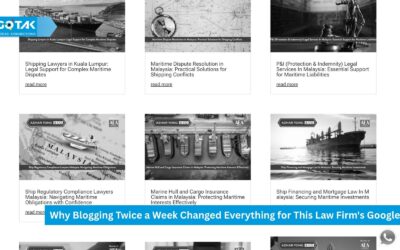
Why Blogging Twice a Week Changed Everything for This Law Firm’s Google Rankings
A 12-Month Organic SEO Journey for a Maritime Law Firm in Malaysia | By LogotakWhen clients ask, "Does blogging help SEO?", they are often looking for a shortcut. However, our 12-month campaign for Azhar Yong & Co. proved that the real power lies in consistency....
What is a Backlink and Why Does Your Business Website Need Them?
A 12-Month Organic SEO Journey for a Maritime Law Firm in Malaysia | By LogotakIn simple terms, a backlink is created when one website links to another. If a reputable industry portal or a legal directory links to your firm’s homepage, search engines view this as a...
How Long Does SEO Take to Work? Real Timeline from a Malaysian Law Firm
A 12-Month Organic SEO Journey for a Maritime Law Firm in Malaysia | By LogotakOne of the most frequent questions we encounter is: "How long does SEO take to show results?" For many business owners, the wait can feel indefinite. However, our recent 12-month journey...
Blog Post: Why Law Firms in Malaysia Cannot Run Google Ads?
A 12-Month Organic SEO Journey for a Maritime Law Firm in Malaysia | By LogotakUnder the strict Legal Publicity Rules 2001, and the recently updated 2026 Bar Council guidelines, advocates and solicitors are prohibited from "touting" or using sensationalist advertising...
Measuring AI Visibility: New Metrics Beyond “Click-Through Rate”
For decades, the success of a digital strategy was measured by the click. We tracked impressions, monitored click-through rates (CTR), and calculated conversions from organic traffic. However, in 2026, as search engines become answer engines, the "click" is no longer...